When something unexpected happens to your property because of government actions, you might feel confused, frustrated, or even helpless. California inverse condemnation is a topic that often leaves homeowners scratching their heads. But with the right information, you can protect your home and land if they’ve been damaged or made less valuable. This guide breaks down what inverse condemnation means in California, how it works, and practical steps you can take if your property is at risk.
What Is California Inverse Condemnation?
California inverse condemnation is a legal rule that helps property owners get compensated when a government action or public utility damages private property without using the usual eminent domain process. Normally, if the government needs a part of your land for a public project, like a new road, they must follow a set process and pay you for it. But sometimes, government activities or public utility work harm property owners without warning or payment. Inverse condemnation gives you a way to seek compensation even if the government didn’t officially start an eminent domain case.
To put it simply, inverse condemnation lets you, the property owner, ask the government or a public utility to pay for your loss if their actions took away the use or value of your property. It’s called “inverse” because the roles are reversed: instead of the government suing to take your property, you take action to recover your rightful compensation.
How Does Inverse Condemnation Happen in California?
Inverse condemnation can take many forms in California. Sometimes, it’s direct, like when a city claims part of your backyard for a new sidewalk. But more often, it’s indirect damage that triggers this law. For example, maybe a city upgrades a drainage system and, as a result, your property starts to flood every winter. Or a new public playground next to your house brings constant noise and traffic, making your home less comfortable and harder to sell.
California courts have ruled that the government must pay if their actions cause a specific and direct injury to your property. This can include actual physical damage, like a cracked foundation from construction vibrations, or a sharp drop in property value, like when easy road access is cut off. The most important thing is that your property is harmed in a special way that most others aren’t. If a citywide event affects everyone equally, it’s much harder to claim inverse condemnation. But if your property is singled out for harm, you may have a valid case.
Another example is when public utilities are involved. Say a utility company’s transformer sparks a wildfire, and your house is destroyed. Even though the damage wasn’t intentional, California law may allow you to seek compensation under inverse condemnation.
Real-World Examples of California Inverse Condemnation
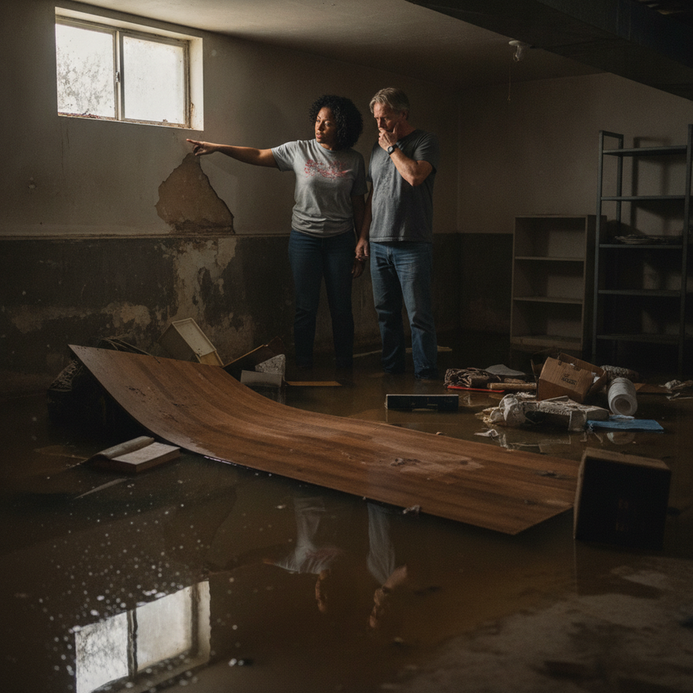
Understanding how these cases play out can help you spot if you’re affected. Here are some real-world examples:
- A city’s aging water main bursts, sending water gushing into your basement. You’re left with ruined flooring, waterlogged walls, and expensive repairs.
- Construction on a major road reroutes traffic, making it nearly impossible for customers to reach your family-owned store. As a result, your business income drops dramatically.
- A utility company’s poorly maintained power lines snap during a windstorm, causing a wildfire that burns your neighborhood. Your home suffers severe smoke and fire damage.
- The city builds a new public park and changes stormwater flow, so now your once-dry backyard turns into a soggy swamp after every rain. Landscaping and outdoor furniture are ruined.
- Loud construction for a public project continues for months right outside your window, making it hard to live in your home and reducing its resale value.
In each of these situations, the property owner didn’t agree to the damage and didn’t get a chance to prevent it. Inverse condemnation law gives you a chance to recover your losses, whether it’s for repairs, lost property value, or other damages.
What Rights Do Property Owners Have?
If your property is damaged by government projects or public utilities, you may have more rights than you realize. California’s constitution is clear: when private property is taken or damaged for public use, the owner must receive “just compensation.” This isn’t limited to formal situations where the government takes your land to build a highway. It also covers many less obvious cases.
One key difference from other legal claims is that you don’t have to show the government was careless, reckless, or meant to harm you. The focus is on the result, not the intent. If the government’s action directly caused the damage, that’s usually enough. The law is designed to be fair, so property owners don’t have to shoulder the costs of public projects by themselves.
For example, if utility work causes a small fire that damages your shed, you don’t need to prove the workers made a mistake. You just need to show the fire was caused by the work and led to your loss. This makes the process a bit different from other types of lawsuits, like personal injury cases, which require proof that someone did something wrong.
The Process: What to Do if You Think You Have a Case
If you believe the government or a public utility has damaged your property, here’s how to start:
- Document the Damage: Take plenty of clear photos of what happened. Save every repair bill, estimate, or receipt. Write down dates, times, and exactly what you experienced. If possible, keep samples of damaged materials (like broken pipes or pieces of burnt wood). The more detail you can provide, the stronger your claim.
- Identify the Responsible Party: Figure out which agency or company is responsible for the damage. Sometimes it’s your city or county, sometimes it’s a state agency, and other times it’s a private utility company. Don’t guess, try to get confirmation in writing.
- Notify the Agency: Many government agencies require you to file a claim before you can go to court. This is called an “administrative claim,” and there are often strict deadlines. Missing this step or waiting too long can hurt your case.
- Consult a Professional: Inverse condemnation law can be complicated. Consider talking to an attorney or legal expert with experience in California property law. They can help you understand your rights, gather evidence, and file paperwork correctly.
- File a Claim or Lawsuit: If the agency denies your claim or doesn’t respond, your next step is to file a lawsuit. This is where you formally ask a judge to order compensation for your losses. The legal process can take time, but it’s often the only way to get fair payment if informal efforts fail.
Every step matters. For example, if you forget to document the damage or miss a filing deadline, you could lose your right to compensation. Acting quickly and keeping good records can make all the difference. If you’re unsure how to start, don’t hesitate to reach out for professional advice as soon as you notice a problem.
Common Challenges and Myths in Inverse Condemnation Claims
Inverse condemnation claims aren’t always simple. Here are some common roadblocks and myths to be aware of:
- Proving Causation: You must show there’s a clear link between the government or utility action and your property damage. If your basement floods, but the cause was heavy rain and not a broken city pipe, your claim may not succeed. Sometimes, you may need experts, like engineers or inspectors, to help prove what happened.
- Special vs. General Damage: The law says your loss must be special to you, not just a problem everyone faces. If a citywide blackout leaves the whole neighborhood without power for a day, that probably isn’t enough. But if only your house loses power for a week because of a specific utility project, you may have a stronger case.
- Time Limits: Strict deadlines apply to these claims. Depending on the agency involved, you might have as little as six months to file a claim after noticing the damage. Waiting too long can end your chances, so don’t delay.
- Agency Defenses: Sometimes, the government or utility will argue that the damage was out of their control, or that you should have acted to prevent more harm. For example, they might say you failed to make temporary repairs or allowed the damage to get worse.
Some myths can discourage people from seeking help. One common myth is that you can’t make a claim unless your whole property is taken by the government. In reality, even partial loss, like the loss of use of a driveway or a drop in property value, can be enough. Another myth is that you must prove the government was negligent. In California, the focus is on the impact, not on whether someone made a mistake. This makes the process fairer to property owners.
Key Laws and Legal Decisions Shaping California Inverse Condemnation
California’s approach to inverse condemnation is shaped by both its constitution and important court cases. The state constitution states that property owners must be paid when their property is “taken or damaged” for public use. This is broader than the federal rule, which usually only covers cases where the entire property is physically taken.
Several court decisions have expanded how these laws are used. For example, California courts have ruled that public utilities, like electric, gas, and water companies, can be held responsible under inverse condemnation, not just government agencies. This has played a big role in wildfire cases where powerlines or utility equipment are believed to have started the fire. Property owners whose homes are destroyed can use inverse condemnation to seek compensation, even if the utility followed safety rules.