Understanding Affordable Housing And Eminent Domain
Affordable housing and eminent domain are two terms you might have heard before, but maybe you’re not sure how they fit together or why they matter to you. Affordable housing means homes that regular people can actually afford based on their income. These might be apartments with rent limits, government-subsidized homes, or special programs that help first-time buyers. The idea is simple: everyone should have a safe, stable place to live, regardless of income.
Eminent domain, on the other hand, is the government’s power to take private property for something that benefits the public. That “public use” could be a new road, a bigger park, a school, or, more and more often, affordable housing. The government must pay the property owner what’s considered fair market value, but the process can still feel stressful or unfair for those involved.
So what happens when your home or business is in the path of a new affordable housing project? You’re not alone in asking. This guide breaks down how affordable housing and eminent domain are connected, why these issues matter for neighborhoods, and what steps you can take if you’re ever affected.
What Is Eminent Domain and How Does It Work?
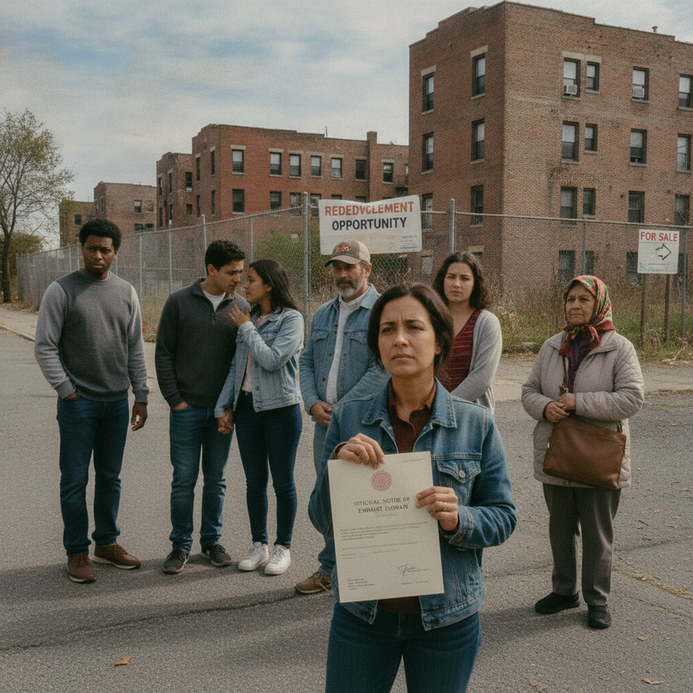
Eminent domain lets a government agency, like your city, county, or state, take private land for projects meant to help the public. This power is in the U.S. Constitution, and every state has its own rules on how it works. The most common uses have always been things like highways, public transit, or schools. But as affordable housing has become a bigger challenge, some cities have started using eminent domain to build new homes or redevelop older areas.
Here’s how the process typically works:
- The government identifies a piece of land it needs.
- The property owner gets a letter or formal notice explaining what’s planned.
- The government offers money based on an appraisal of the property’s value.
- There’s a negotiation. If you can’t agree on a price, the case might go to court, where a judge or jury decides the fair value.
- If the property is taken, the owner is paid (sometimes after a legal fight).
“Just compensation” is the legal term for the payment you’re supposed to get. But figuring out what’s truly fair isn’t always easy. Sometimes the government’s offer seems low, especially if you’ve owned the property a long time or if it’s your home or family business. That’s part of why eminent domain can be so controversial.
Why Is Eminent Domain Used for Affordable Housing?
There’s a growing need for affordable housing in cities and towns of all sizes. Rents are climbing, home prices are out of reach for many, and local governments feel pressure to act. Eminent domain is one tool they can use when other options, like buying land on the open market, don’t work or aren’t fast enough.
Cities might use eminent domain to:
- Redevelop blighted areas (places with abandoned buildings, empty lots, or unsafe conditions) into new affordable apartments or houses.
- Assemble enough land in one spot for a larger project, such as a mixed-income complex or a new neighborhood with both affordable and market-rate homes.
- Replace old, worn-out buildings with safer, better-managed affordable housing.
For example, if a city wants to build a new apartment complex with lower rents, but can’t buy all the land from current owners, it might use eminent domain to acquire the remaining properties. The goal is to create homes for those who need them most, families, seniors, and essential workers priced out by the regular market.
But this approach raises tough questions. Is building affordable housing truly “public use”? Courts have generally said yes, but many argue it pushes too far into private property rights. And while some see it as a way to fix housing shortages, others worry about the fairness and long-term impact on existing communities.
The Impact of Urban Renewal Displacement
Urban renewal is the process of updating and improving city neighborhoods, often on a large scale. While it can bring new parks, roads, and affordable housing, it can also displace people and businesses. When properties are taken for redevelopment, the people who live or work there may have to move, sometimes far from where they’ve built their lives.
The effects of displacement go beyond just finding a new address. People may lose access to the schools their kids attend, the grocery store they trust, or the neighbors they rely on for support. Small businesses, like corner stores or family-run restaurants, might not survive the move. Social ties and local culture can be lost, and in some cases, entire communities are scattered.
Some cities offer programs to help those displaced, but the support varies widely. For example, a city might provide extra money to cover moving costs or help finding a new apartment. But the new homes may be more expensive, farther away, or simply not feel like “home.”
Historically, urban renewal projects have sometimes targeted neighborhoods with mostly lower-income residents or communities of color. Decades ago, highways or new developments often split up tight-knit communities, leaving lasting scars. Today, cities try to avoid repeating those mistakes, but the risks remain whenever eminent domain is used for big projects.
How Redevelopment Project Relocation Works
If your home or business is part of a redevelopment project, you may be entitled to relocation assistance. This is meant to help with both the cost and the stress of moving. Depending on where you live and the kind of project, assistance can include:
- Financial help for moving expenses, such as hiring movers or renting a truck.
- Payments to cover higher rent or mortgage costs if your new place is more expensive than your old one.
- Help finding a new home or business location that fits your needs.
- Counseling or support services to guide you through the process.
For example, if you’re a renter who has to move because your building is coming down, you might get money for a security deposit, first month’s rent, and the cost of moving your belongings. If you own your home, you could be eligible for extra compensation if it costs more to buy a similar home elsewhere.
The rules for relocation assistance come from federal, state, or local laws. The Uniform Relocation Assistance and Real Property Acquisition Policies Act is a federal law that sets minimum standards, but state and city programs can offer more help. It’s important to ask questions, read any documents you’re given, and keep records of expenses and communication. If the offer feels unfair, you have the right to challenge it or seek advice from a lawyer or tenant rights group.
Sometimes, people find the assistance is enough to make the move manageable. Other times, it may fall short, especially if the new neighborhood is more expensive or farther from work or school. That’s why it’s important to understand your rights and push for the support you need.
Affordable Housing And Eminent Domain: Real-World Examples
Let’s look at how these issues play out in real cities:
In Atlanta, a city-owned housing authority used eminent domain to acquire aging apartment buildings and vacant lots. The goal was to build new, mixed-income housing, with a percentage of units reserved for low-income families. Some longtime residents felt the compensation didn’t match the emotional value of their homes or the cost of finding a comparable place in the same neighborhood.
In Los Angeles, a major redevelopment project aimed to transform a former industrial zone into a mixed-use area with affordable apartments, parks, and retail. Several small business owners were forced to relocate. While they received payments to help with moving expenses, some struggled to find comparable space at similar rents, and a few decided to close their businesses for good.
Another example comes from New York City, where the city used eminent domain to clear land for large, subsidized housing projects. In some cases, the projects succeeded in adding hundreds of affordable apartments. But critics pointed out that entire blocks of historic homes and small businesses were lost, and not all displaced residents were able to return to the new developments due to tighter eligibility rules or higher rents.
Each of these real-world stories highlights the complicated trade-offs. Cities gain much-needed affordable homes, but the process can also disrupt lives and reshape neighborhoods in ways that aren’t always positive. It’s a balancing act between the urgent need for housing and the rights and well-being of people who live and work in these areas.
Tips for Property Owners: What to Do If You’re Affected
If you get a letter saying your property is being considered for eminent domain, it’s normal to feel worried or confused. Here are some practical steps to help you navigate the process:
- Read every notice or letter you get from the government. Don’t ignore anything, even if it looks official but confusing.
- Attend public meetings about the project. Ask questions about the timeline, the reasons for the project, and what will happen to your property.
- Get your own appraisal from a qualified, independent professional. This helps you know what your property is really worth, which can be different from the government’s first offer.
- Consult with a lawyer or an advocate who understands eminent domain. They can explain your rights and help you negotiate for better terms.
- Ask about all available relocation assistance, including help with moving costs, temporary housing, or additional compensation if your new place costs more.
- Keep detailed records of all communication, meetings, and documents related to your case. This will help if you need to dispute an offer or take your case to court.