Ever wondered what happens when flooding from a nearby construction project damages your property in California? You’re not alone. Many property owners are surprised to find out that there’s a specific legal concept designed for these situations: California inverse condemnation flooding construction damage. In this guide, you’ll learn what it means, how it affects you, and what steps you can take if your home or land is affected. Let’s dive into the details that can help you protect your rights and find a path forward.
What Is Inverse Condemnation in California?
Inverse condemnation is a legal term, but the idea is simple. If the government or a public agency causes damage to your property, like flooding from construction work, you might be owed money, even if they didn’t formally take your land. In California, property owners have strong protections under the state constitution. If a public project (say, road construction, water system upgrades, or any government-run work) causes harm to your property, you can seek compensation. You don’t have to prove anyone was careless or did something wrong. The law just asks if the project caused the damage.
So, if your basement floods after a city project changes the flow of water in your neighborhood, you could have a valid claim. This is especially important because these cases don’t just cover direct property takeovers, they include any serious impact to the use or value of your property.
How Construction Projects Lead to Flooding Damage
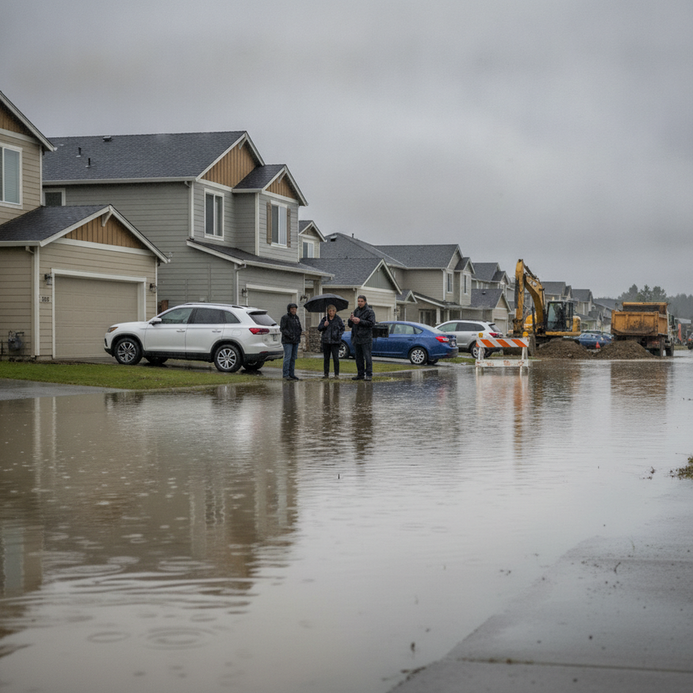
Let’s talk about how construction can lead to flooding. When cities upgrade sewers, build new roads, or even put in parks, they sometimes change how water moves through an area. Maybe new pavement prevents rain from soaking into the ground. Or, perhaps dirt and debris block drainage channels. Suddenly, a big storm sends water straight into your yard or basement, damage that never happened before the project.
One common example is when construction raises the ground level or changes slopes, causing water to flow in new directions. Another is when construction debris clogs storm drains, leaving water with nowhere to go. In both cases, your home might be on the receiving end of unwanted flooding.
If this sounds familiar, you’re dealing with more than just bad luck. California law recognizes that these issues aren’t random, they’re the result of public works that could have been planned or managed differently.
Proving a California Inverse Condemnation Flooding Construction Damage Claim
How do you actually show that your property was damaged because of a public project? There are a few steps you’ll need to follow. First, you’ll want to document the damage. Take photos, write down dates, and save any repair bills. Next, try to connect the dots between the construction work and your flooding. Did the problem start only after construction began? Did neighbors have the same issue? Did you notice changes to the land or water flow nearby?
Sometimes, it helps to talk with a local engineer or contractor who can explain how the project changed drainage patterns. These details make your case stronger. Remember, you don’t have to show that the government acted with bad intentions, just that their actions caused the damage.
Many successful claims include:
- Proof that a public construction project happened nearby.
- Evidence that the flooding or damage hadn’t happened before.
- A clear link between the project and the change in water flow or property use.
- Documentation of the financial impact (like repair costs or lost value).
The Legal Process: What to Expect
Taking action can feel overwhelming, but knowing the steps helps. In California, most people start by filing a claim with the public agency responsible for the project. This might be the city, county, or a special district. If that doesn’t lead to a fair settlement, you might need to file a lawsuit for inverse condemnation.
Don’t worry, these cases don’t mean you have to face off against the government alone. Many property owners work with professionals to gather evidence, calculate losses, and present their case. Courts in California generally look at whether public work directly caused the harm, and if so, they often require the government to pay for repairs, lost value, or even temporary housing if the damage is severe.
The process can take time, but if you’re prepared, you have a good chance of a fair outcome. Keeping detailed records from the start gives you an edge.
Real-Life Outcomes: What Property Owners Can Recover
What can you actually get if you win an inverse condemnation case in California? The law aims to make you whole again. That means you could be reimbursed for:
- Repairing flood damage to your home or land.
- The drop in your property’s value because of the flooding.
- Loss of use if parts of your property are unusable for a time.
- Sometimes, the cost of temporary housing if you have to move out during repairs.
A recent example in California involved a neighborhood where new road construction changed drainage and caused repeated yard flooding. Homeowners were able to show that the city’s project was the tipping point, they’d never had flooding issues before. The court ordered the city to pay for repairs and compensate the homeowners for the hassle and reduced property values. These real-world outcomes show that the law isn’t just words on a page, it can help you recover from damage you didn’t cause.
How to Get Help and What to Do Next
Feeling flooded, literally and figuratively, after reading all this? The most important thing is to act quickly. The sooner you gather evidence and start the claim process, the stronger your case will be. If you’re unsure where to begin or need help understanding your rights, resources like eminentdomain.help are here for you. We focus on helping people just like you make sense of California inverse condemnation flooding construction damage, understand their options, and take the next steps.
If you think your property has been damaged by a public construction project, don’t wait. Start documenting, reach out for information, and explore your legal options. You don’t have to face this alone.
![A flooded residential street in California with visible construction equipment in the background, overcast skies, and water pooling around homes. Highly detailed, photo-realistic.]
Conclusion
California inverse condemnation flooding construction damage isn’t just a headache, it’s a legal issue with real solutions. If your property has suffered after a public project, you have rights and options. Contact us to learn more.