Ever wondered what your rights are if the government’s actions damage your property, even if they don’t officially take it? You’re not alone. In this guide, you’ll get a clear answer to the question, “What is the inverse condemnation California definition?” You’ll also learn how it works, why it matters for property owners, and what you can do if you think your rights have been violated.
What Is Inverse Condemnation? A Straightforward Definition
Let’s start with the basics. Inverse condemnation is a legal concept that deals with property rights. In California, it happens when the government (or a public agency) does something that damages or takes private property, but doesn’t formally use the standard eminent domain process. Instead of the government starting the process, the property owner has to take action to get compensation.
So, what is the “inverse condemnation California definition”? It’s this: Inverse condemnation is when a property owner sues the government to get paid for property loss or damage caused by a government action or project, without a formal taking. This is the opposite of traditional condemnation, where the government sues to take your property.
The core idea is simple. If the government’s work harms your property, they may owe you money – even if they never filed a lawsuit to take your land. This right is meant to keep things fair, so people aren’t left footing the bill when public projects cause real harm.
How Does Inverse Condemnation Work in California?
Inverse condemnation cases start with a property owner noticing damage or loss tied to a government project. This could be anything from flooding caused by new roads to a loss of access due to highway construction. Maybe you notice cracks in your walls after major city construction nearby, or your business suddenly gets fewer customers after a street is rerouted.
To bring an inverse condemnation claim, you generally need to show two things:
- The government (or a public agency) took an action that damaged or interfered with your property.
- That action caused you a specific loss – like a drop in your property value, physical damage, or loss of use.
For example, imagine your backyard starts flooding every rainy season after the city builds a new drainage system nearby. If you can show that the new system is the reason for the flooding, and that it’s hurting your property’s value, you may have a case. Another example: A city widens a road, and the new layout makes it much harder for customers to park at your small business. If you can prove your profits dropped because of this, it might count.
California courts look carefully at the facts. Not every inconvenience counts. You’ll need to connect the dots between what the government did and the harm you’re experiencing. But if the harm is serious and directly tied to government activity, the law usually says you deserve “just compensation.”
Examples of Inverse Condemnation Situations
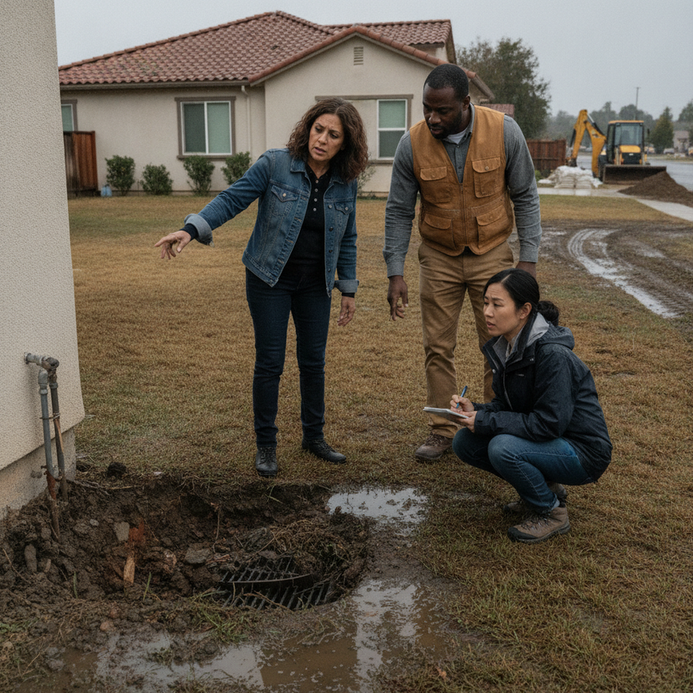
It helps to see how this plays out in real life. Here are some common scenarios where inverse condemnation comes up in California:
- A city changes the flow of a creek, and your home starts to erode or flood. Maybe your landscaping gets washed away or your foundation is threatened after a storm.
- A new highway blocks direct access to your business, making it hard for customers to reach you. This isn’t just an inconvenience – for some businesses, it can mean a big drop in revenue.
- A public utility installs equipment that makes your property unsafe or lowers its value. For example, if a new power substation is built right next to your home, and you lose a chunk of your backyard or the property is now much harder to sell, you could have a claim.
- Construction vibrations or dust from a public project damage your house or make it less enjoyable to live in. This could mean cracked walls, broken windows, or even just months of unbearable noise making your home less livable.
- A city project raises the street outside your house, causing water to pool on your property every time it rains. This repeated flooding could damage your landscaping, driveway, or even your home’s foundation.
In each of these cases, the property owner didn’t agree to the harm or get paid for it up front. Instead, they discovered the damage after the fact and had to ask the government to pay for the loss. The law recognizes that sometimes the effects of public projects aren’t obvious until they happen, and property owners shouldn’t be left without options.
Key Legal Principles Behind Inverse Condemnation in California
Inverse condemnation law in California is built on a few important legal ideas. Knowing these can help you understand why the law exists and how it protects property owners.
The California Constitution
The main rule comes from the California Constitution. It says that private property can’t be “taken or damaged” for public use without just compensation. This is broader than the federal rule, which mostly covers takings but not all types of damage.
So, if a government project harms your property, you have a state constitutional right to be paid for it. Let’s say a sewer line bursts because of poor maintenance by a public agency, and your basement floods. The California Constitution says you may be entitled to compensation, even if the agency never intended for the damage to happen.
What Counts as a “Taking” or “Damaging”
Not every negative impact triggers inverse condemnation. Courts look at whether the government’s action was the direct cause, and whether the harm was substantial. For example, small annoyances or temporary problems usually don’t count. A little extra traffic or some occasional construction noise likely won’t get you far in court.
But if your property’s value drops a lot or you lose the ability to use it as you planned, you may have a strong claim. If you can’t rent out your property because of a persistent problem caused by a government project, or if your home becomes unsafe to live in, those are the kinds of damages the law is meant to address.
The Burden of Proof
In inverse condemnation cases, the property owner usually has to prove that the government is responsible and that the damage or loss is real. This can involve expert reports, property appraisals, and detailed records. For example, you might need to show before-and-after photos, estimates from contractors for repairs, or documentation of lost business income.
It’s also important to show that the damage wasn’t just a coincidence. Maybe your house had no flooding issues for years, but a new city storm drain project changed the water flow. If experts agree the project likely caused the change, your case is stronger. On the other hand, if the government can show the problem existed before their work, or was caused by an unusual natural event, your claim may be harder to prove.
What Property Owners Need to Know: Rights and Next Steps
If you think your property has been damaged by government action in California, here are some things to keep in mind:
- You have the right to seek compensation for real harms caused by government projects, even if the government didn’t file an eminent domain case first. This includes both visible damage and loss of value or use.
- It’s important to act quickly. There are deadlines (called statutes of limitations) for filing an inverse condemnation claim. In California, you usually have three years from when you notice the damage, but details can vary. Missing the deadline can mean losing your right to compensation.
- Gathering proof is crucial. Keep photos, repair bills, property value estimates, and any letters or notices from the government. If you notice a change after a new project, document it right away and keep a timeline.
- These cases can be complex. Sometimes the government will argue that the damage was just a side effect or that it’s not responsible. You may be asked to prove that the problem wasn’t caused by something else, like a heavy storm or an unrelated accident.
- Getting professional help early can make a big difference. Real estate appraisers, engineers, and attorneys who know this area of law can help you understand your situation and build a strong case.
For example, if you notice recurring flooding in your yard after a city project, don’t wait for it to get worse. Start taking photos, keep notes on when it happens, and save any repair receipts. The more organized you are, the easier it is to show the problem is real and connected to the government’s work.
How Inverse Condemnation Differs from Eminent Domain
It’s easy to mix up inverse condemnation with the more familiar process called eminent domain. Here’s how they differ:
Eminent domain is when the government starts a legal process to take private property for a public purpose, like building a school or road. The owner is supposed to get paid up front, and the process is official – with notices, hearings, and sometimes court. The government does the paperwork, and you get a chance to negotiate or challenge the amount offered.
Inverse condemnation flips the script. Here, it’s the property owner asking for payment because the government took or damaged something without using the proper process. The owner brings the claim, not the government. You’re the one who must prove that you deserve to be paid.
Both processes are about fairness. The main difference is who starts the case, and whether the harm happened before or after the government acted. In eminent domain, you see the government coming and have some time to prepare. In inverse condemnation, the damage often surprises you, and you have to take steps to protect your rights after the fact.